Genre
Synopsis
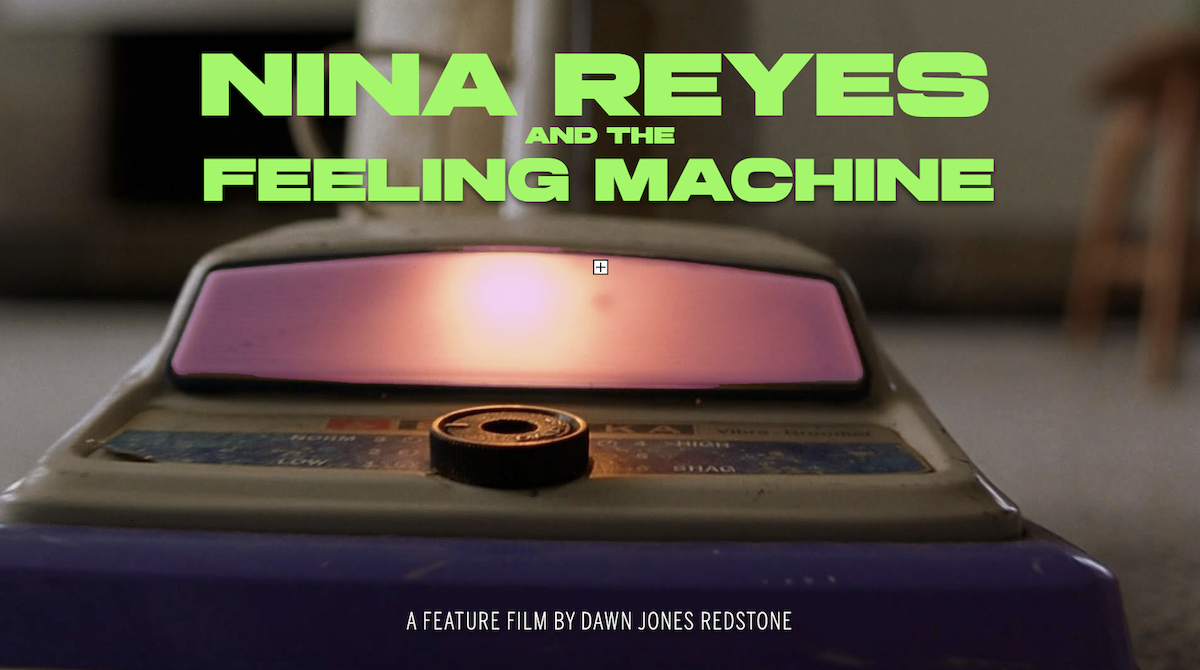
NINA REYES AND THE FEELING MACHINE Nina Reyes is a guarded, fiercely self-contained queer Latina raised on "no hagas olas" (don't make waves) and "aguántate" (hold it in). It worked, until her girlfriend leaves her for not crying enough at a dolphin documentary. Now she copes the way she always has, assembling Oregon landscape puzzles, doom-watching the news, feeling nothing at all.
Her brother Ron refers her to Cami, an eccentric scientist working out of the back of a Portland convenience store, who runs an experimental therapy using modified household appliances to help people reconnect with their emotions. Everyone gets a device. Nina gets a vacuum cleaner.
In group sessions that blur the line between performance art and therapy, Nina and her ragtag crew of emotional misfits stumble through an odyssey of human feeling — chanting, humming, trying to get their devices to turn on. She meets Sidney, a former midwife holding out for what she calls the Best Emotion: a transcendent mix of awe, joy, gratitude, and forgiveness all at once. Nina says she'd settle for disappointment.
Only there to win back her ex, Nina tries to hack her vacuum and shortcut the process. It backfires. Her emotions explode, she pushes everyone away, and quits — but the numbness doesn't work anymore.
It's a quiet moment of honesty with Ron, and a reconciliation with Sidney, that finally cracks her open. Nina returns, picks up a new device — a blow-dryer — and in an unexpected act of vulnerability and kindness, helps Sidney feel for the first time. The room breaks open. One by one, every device hums to life.
They feel the Best Emotion. All of it at once.
And then they go get tacos.
Bio
Dawn Jones Redstone is a queer, Mexican American writer/director based in Portland, Oregon, known for her thoughtful and imaginative storytelling. Her feature film, Mother of Color, is now streaming on major platforms, continuing to resonate with audiences for its compelling narrative and emotional depth.
Prior to that she directed multiple short films including the acclaimed Sista in the Brotherhood, distributed by Collective Eye, tweeted about by the Governor of Oregon, and purchased by the US Dept of Labor.
Rooted in cinema as the ultimate empathy machine, her narratives often feature women of color exploring themes of resistance, and self actualization. She believes in participating in community and using her hiring decisions to help create an inclusive filmmaking environment that reflects and brings needed perspective to the world we live in.
Her upcoming project, Appliance of Science, was selected for the Stowe Story Feature Campus, Bend Film Basecamp and made it to the second round of the Sundance Development Track. She was also a mentor for the Women in Film Portland chapter's new Educate/Incubate program and spoke at Creative Mornings in Portland.
In 2017, she was selected to shadow Debra Granik on the set of Leave No Trace. She was named a Woman of Vision by the Daily Journal of Commerce and is the recipient of OMPA's Inspiration and Service Award for her work helping to bring equity to the state film incentives in the form of HB 3010.
She's on the board of Portland Panorama, and on the advisory council for Lesbian Culture Club. She lives in Portland, Oregon with her wife, daughter, two cats and a dog.
Awards History
Second round of Sundance Development Track (current). Excepted to the Stowe Story Labs. BendFilm Basecamp accepted project. Among 18% invited to apply for Oregon Community Foundation's Creative Heights grant. Nominated for ATT Untold Stories by Stowe Story Labs