Parity Pipeline

Parity Pipeline

Untitled Melanie La Rosa (Renewable Rikers Project)

Directed by Melanie La Rosa

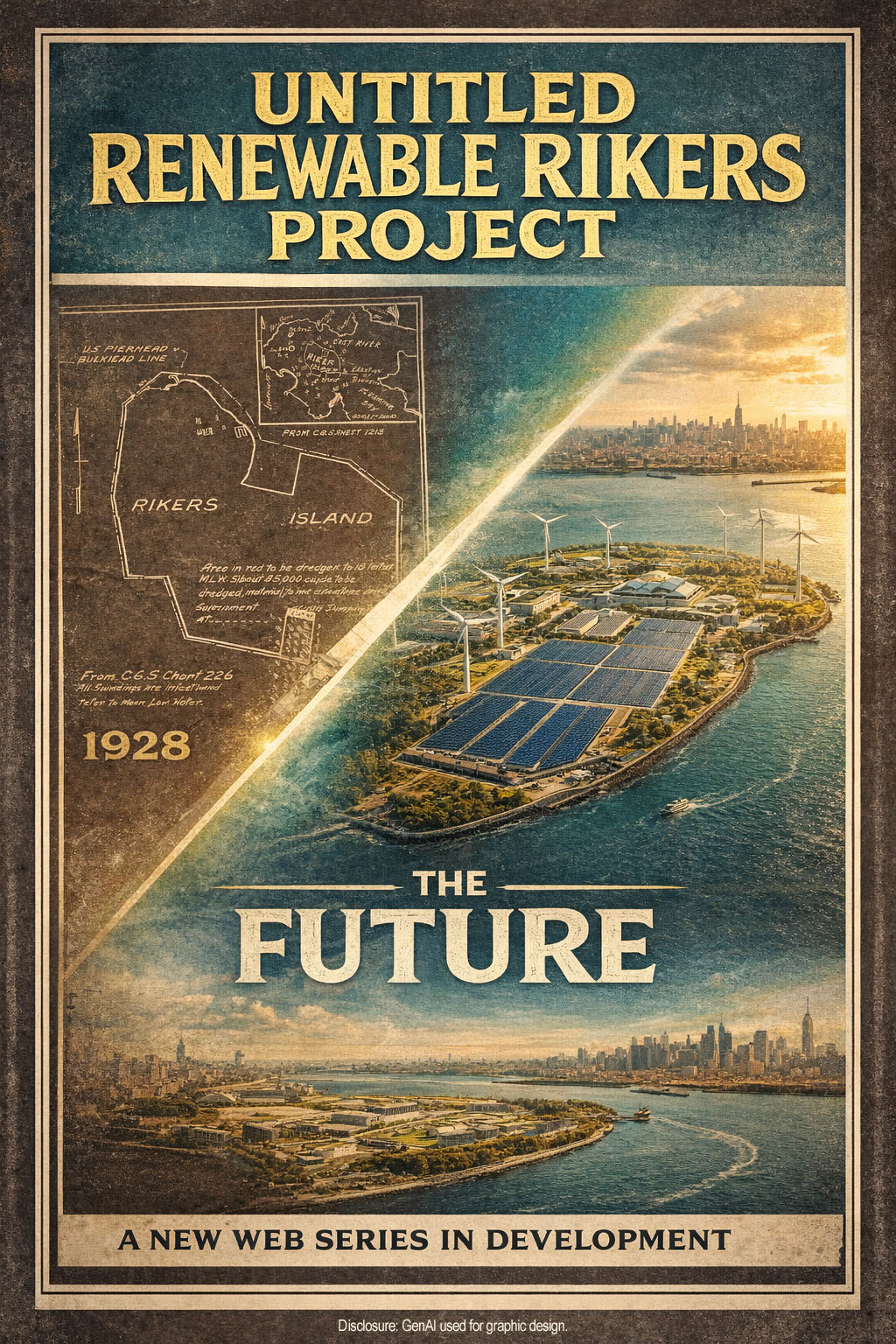
Rikers Island is notorious. Its toxic legacy began after a tiny island was named for a judge known for sending free Black people back to slavery in the 1800s. Now, the jail is known worldwide for the exceptionally harsh conditions and planned to close in 2027. It has a bright future - a 2021 law mandates turning Rikers Island from a site of systemic racism into a clean energy hub, restoring neighborhoods and lives.

  • ABOUT
  • BIO

Genre

Synopsis

Cities are often thought of as a collection of buildings and transit systems. But this is incorrect. Cities are people, and it is people who make a city what it is. Rikers Island is a part of New York City known globally. The name has become synonymous with degrading, miserable conditions. But few people know the history of Rikers Island, and, unfortunately, far too few know its potential future. In 2021 New York City passed the “Renewable Rikers” plan. The big idea is to turn Rikers Island from a place of interminable incarceration and injustice into a green energy and infrastructure hub that will be a kind of restorative justice. The jail is legally required to close by 2027, and this plan is, literally, a once-in-a-generation chance for New Yorkers to turn that land into a site of helping communities and not hurting them. This is an epic transformation from the past. The original “Riker” was Judge Richard Riker, a 19th century judge well-known for sending free Black people back to the south, to slavery, even if they were free and had the papers to prove it. The Riker family owned the island, which was a tiny speck of undeveloped land in the East River. In the 1920s, New York City bought the island as it needed a site for waste, and used prison labor to transport landfill waste to expand it, quadrupling its size. Then the city built a jail on it, and that jail has been in service ever since. The island’s geography consists of landfill waste from a century ago, including coal ash, which is off-gassing methane. No humans should inhabit it; yet, they still do. Renewable Rikers will fix this. 


UNTITLED RENEWABLE RIKERS WEB SERIES will sketch out this past, present, and future in six engaging episodes. Geared to audiences deeply concerned about climate, justice, sustainable living, and democracy, this series will highlight the people who forged the original destructive path, and the ones who shined a light to a plan for restoration.


Bio

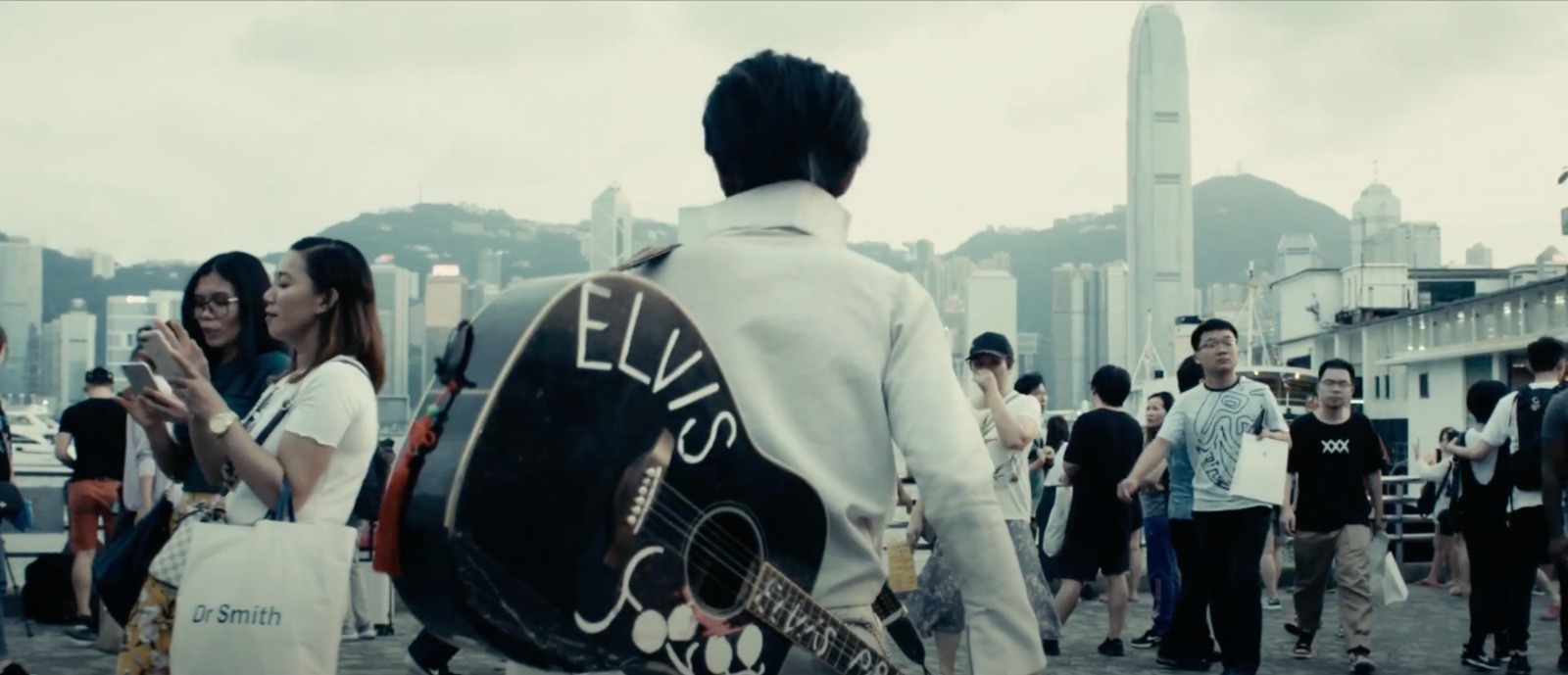
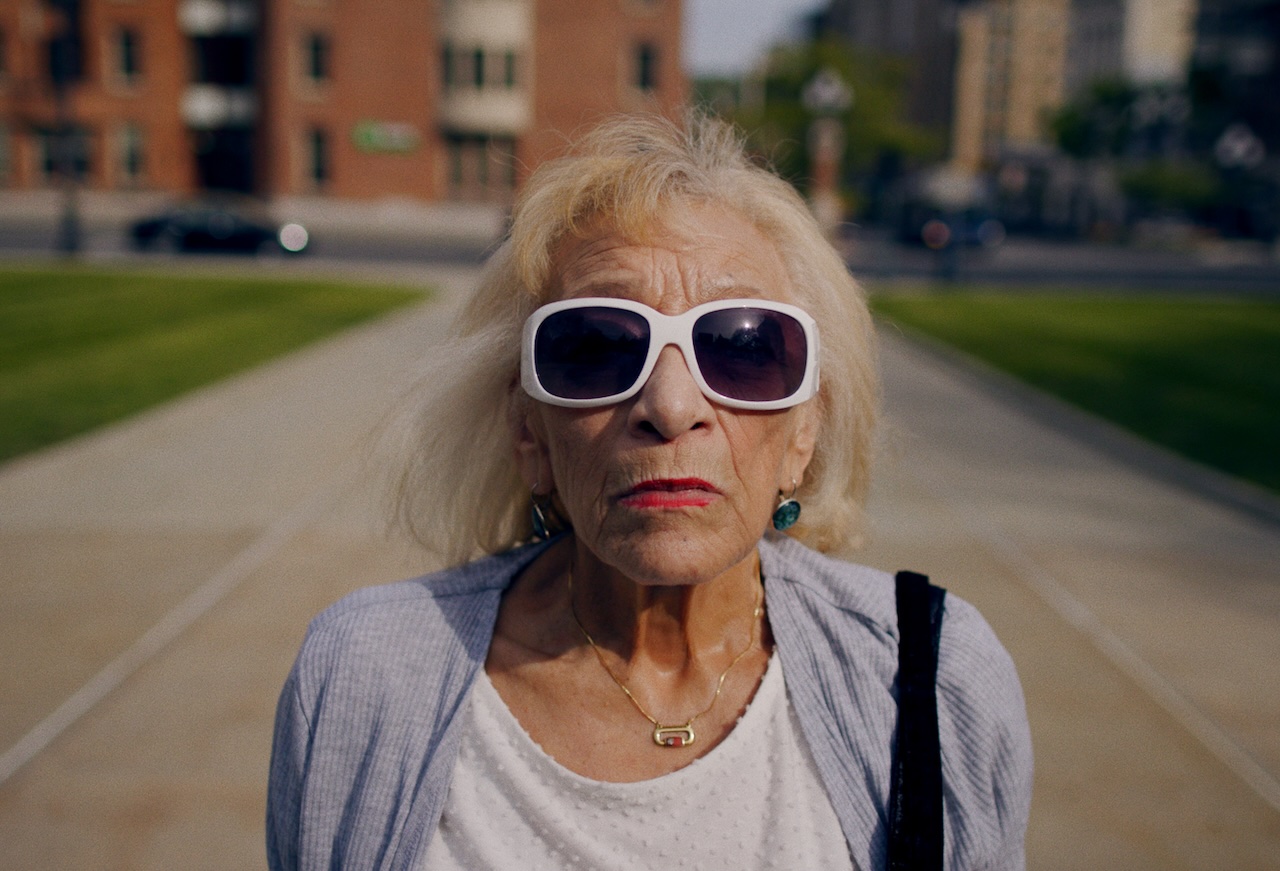
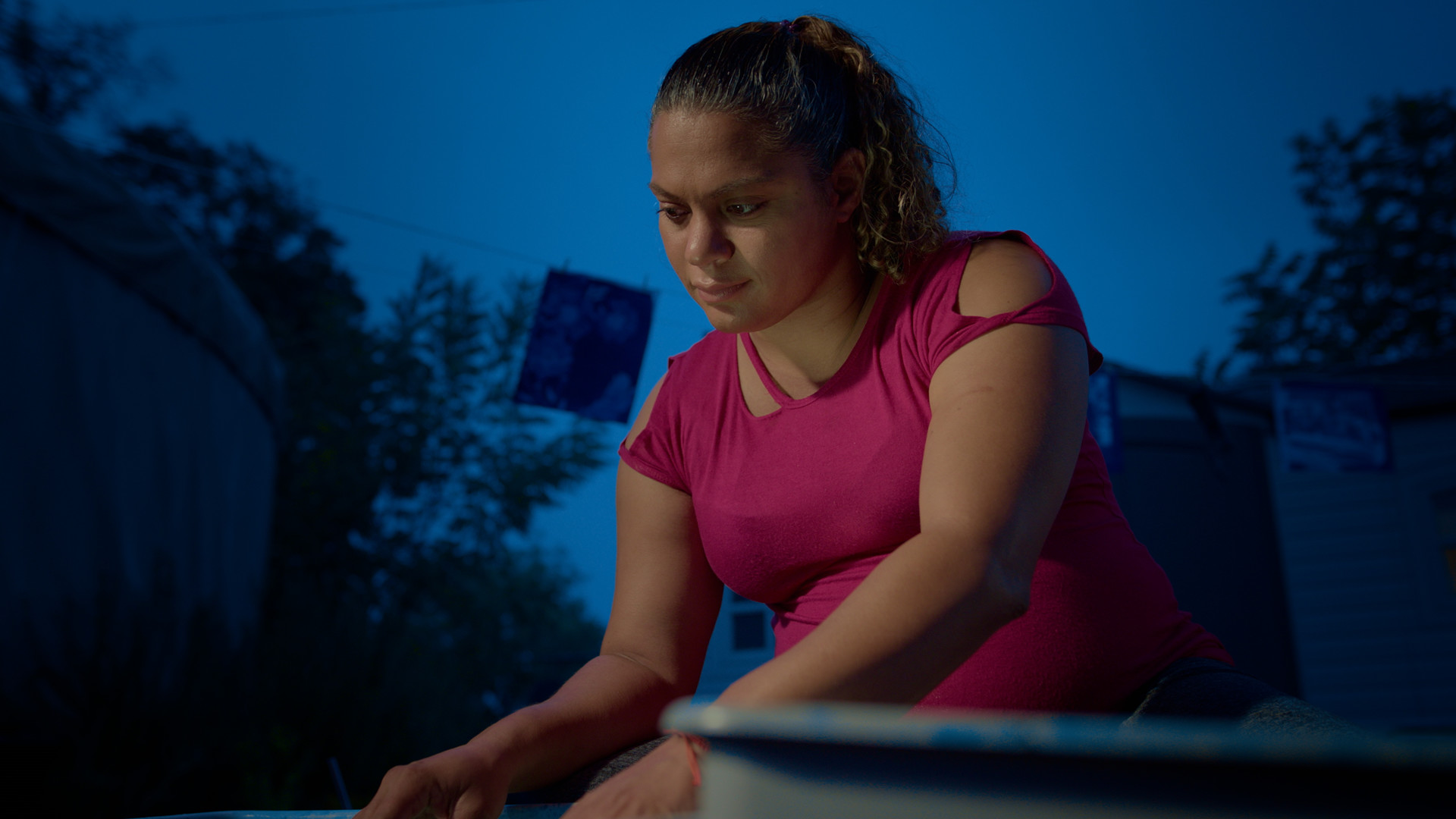
Melanie LaRosa is a filmmaker, professor, and author. Her 2024 documentary, HOW TO POWER A CITY, explores renewable energy in six locations. Nominated for four awards, it did a festival and conference run through 2024-25 and broadcasts nationally on PBS starting May '25. It is distributed by New Day Films. Also in May ‘25, her new book CONTEMPORARY POST-PRODUCTION will be published by Routledge. She is a Public Voices Fellow on the Climate Crisis and has written op-eds and articles published in The Progressive, NACLA, and other respected magazines. 


Her previous films include THE POETRY DEAL: A FILM WITH DIANE DI PRIMA (PBS, Women Make Movies) and SIR: JUST A NORMAL GUY (Free Speech TV, Women Make Movies). 


“How To Power a City” is a singular film looking at how varied leaders led renewable energy projects, from tiny community-based projects to entire utilities. Distribution includes a wide range of screenings, educational sales, and PBS broadcast/streaming. Melanie has been invited to present the film and speak about her work at conferences and events including McGill University (Montreal), the American Public Health Association 2024 conference, CleanMed '24, the Virtual Island Summit '24, Hofstra University, and many more. 


Her book, "Contemporary Post-Production: Create, Cut, Collaborate, Color, Deliver” (Routledge/Taylor & Francis, 2025), is published by the world's leader in filmmaking texts. It weaves together technical guidance, interviews with four contemporary filmmakers, and historical sections on important early filmmakers and their approach to editing. 


Melanie is an Associate Professor of filmmaking at Pace University in New York. Collaborative class projects include working with the Smithsonian Museum of the American Indian, Teatown Lake Preserve, Parenting, Prisons, and Pups, and other organizations.